
Resurrecting the dead is hard work.
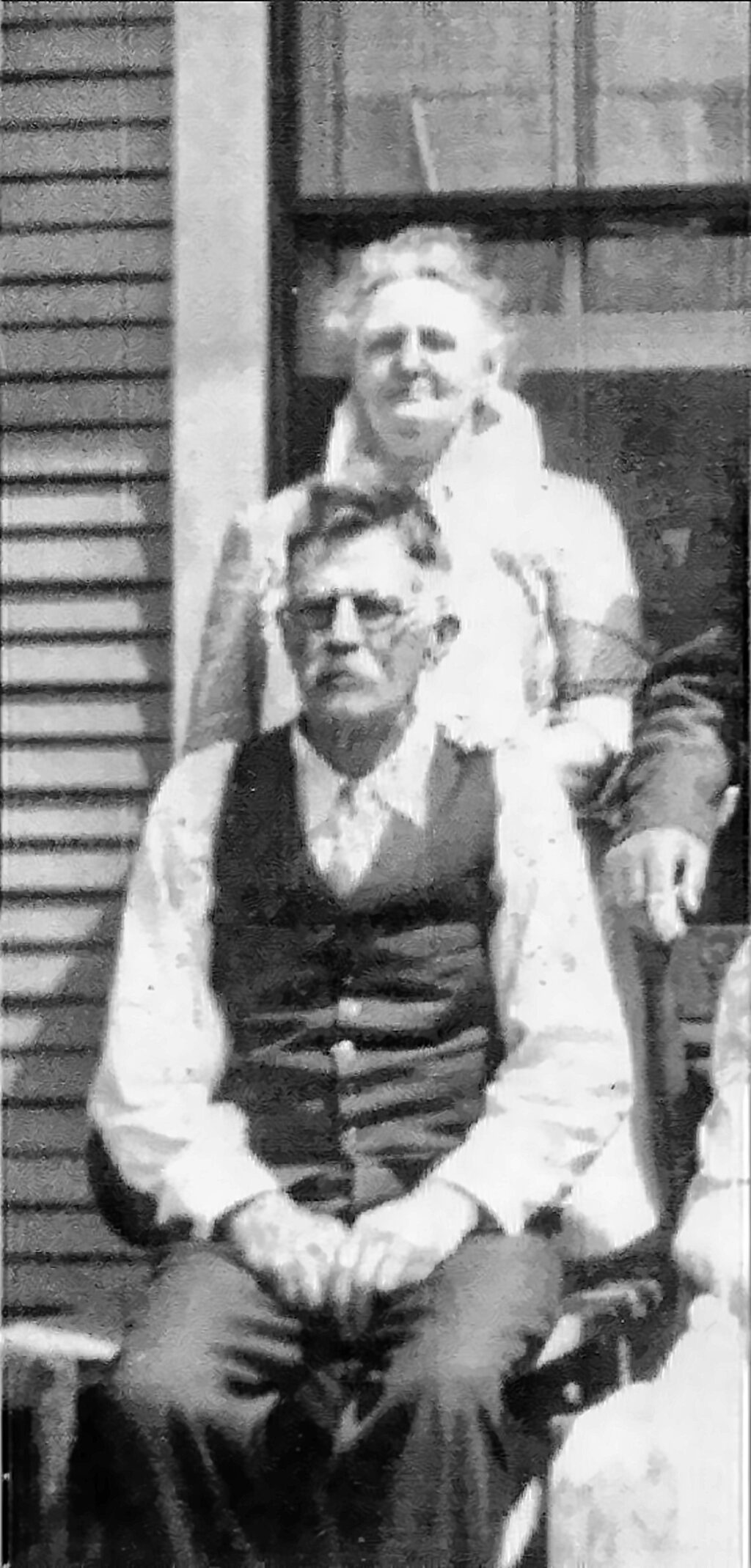
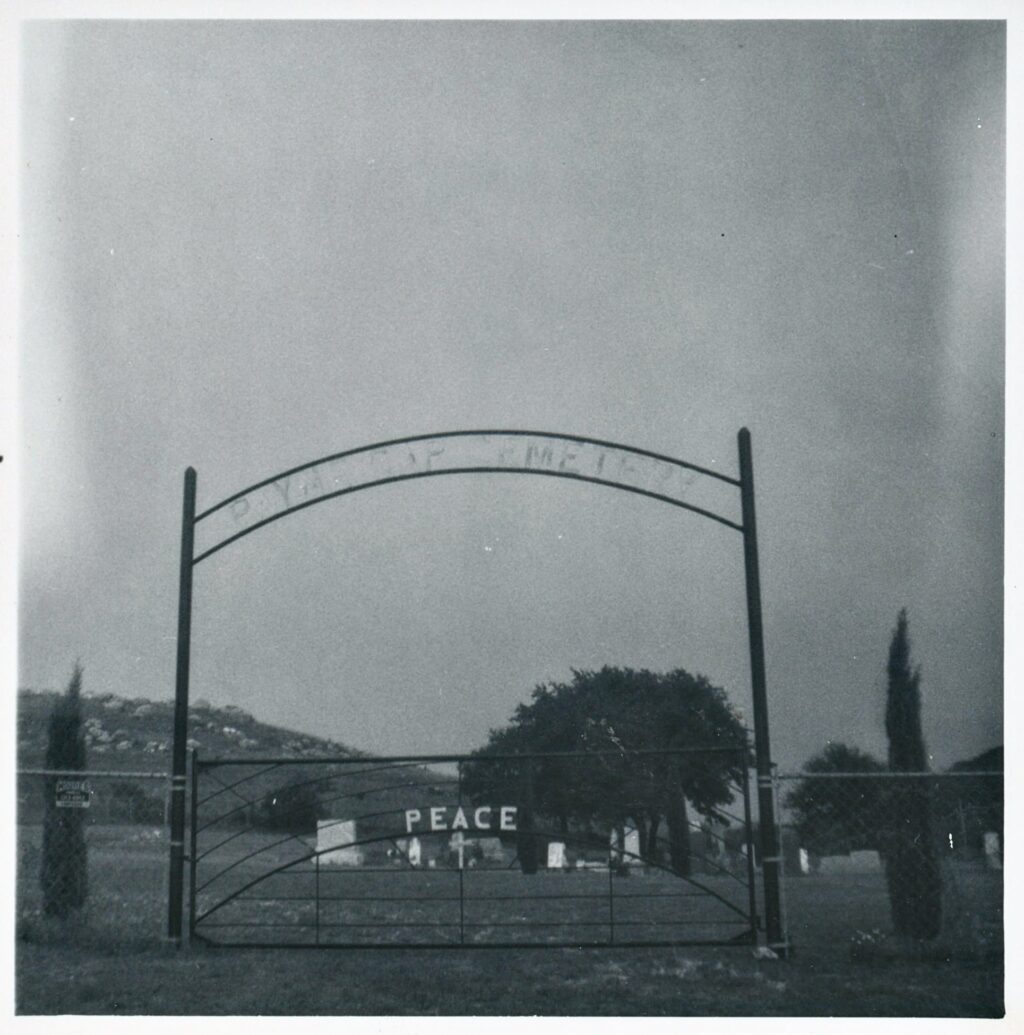
On January 3, 1911, Charles E. Curtiss (1857-1941) and his wife, Kate [Alexander] Curtiss (1875-1953), gathered with other mourners at the Payne Gap Cemetery to say goodbye to the couple’s infant son. Kate was thirty-six, and Charles was fifty-four. The simple grave was marked with a rock headstone and footstone. He was born on September 21, 1910, and died a few months later in Lometa on January 2, 1911. This child, their last, followed five other children: Annie, Ezera, Charlie, Culberson, and Walter. Dr. W.D. (Walter Day) Biggs (1873-1944),1A full accounting of Dr. Biggs’ life is told in The Brush of Angels’ Wings: the Story of the Country Doctor by Roland Windell, Dr. Biggs’ son-in-law (San Antonio, The Naylor Company, 1952) attending physician who practiced in Lometa, reported in the death certificate that the child was “diseased from birth with bifida of the spine.” Dr. Biggs cared for the child starting from his birth and last saw him alive on December 15, 1910, a couple of weeks before his death. The undertaker was J.N. Mason, and the burial was at the Payne Gap Cemetery, a day after his death. J.S. (James Sidney) Alexander (1873-1942), Kate’s brother, who likely lived in Long Cove near Lometa, signed the certificate as informant. At the time of their son’s death, Charles and Kate lived in the Pleasant Grove area west of Payne Gap between the Elam Berry and Arthur Goode families.
It’s not certain how long it took before the location of the Curtiss grave was lost—maybe as little as a couple of generations. One hundred and fifteen years following the death, a large trove of documents covering the Payne Gap Cemetery on file with the Mills County Historical Commission helped very nearly recover its whereabouts. An early cemetery survey locates the Curtiss grave and introduces another lost grave: “Infant’s or small child’s grave with native rocks marking head and foot–unknown (one of these two graves, grave 1 in row and grave 1 and row 2, is the grave of an Alexander child; the other is the grave of a Curtis [sic] child.)” These two small graves would have been oriented end-to-end, horizontally next to each other, and rather isolated according to the survey. After all, these early graves were installed only twenty or so years after the cemetery was established in 1889 when it was sparsely populated.
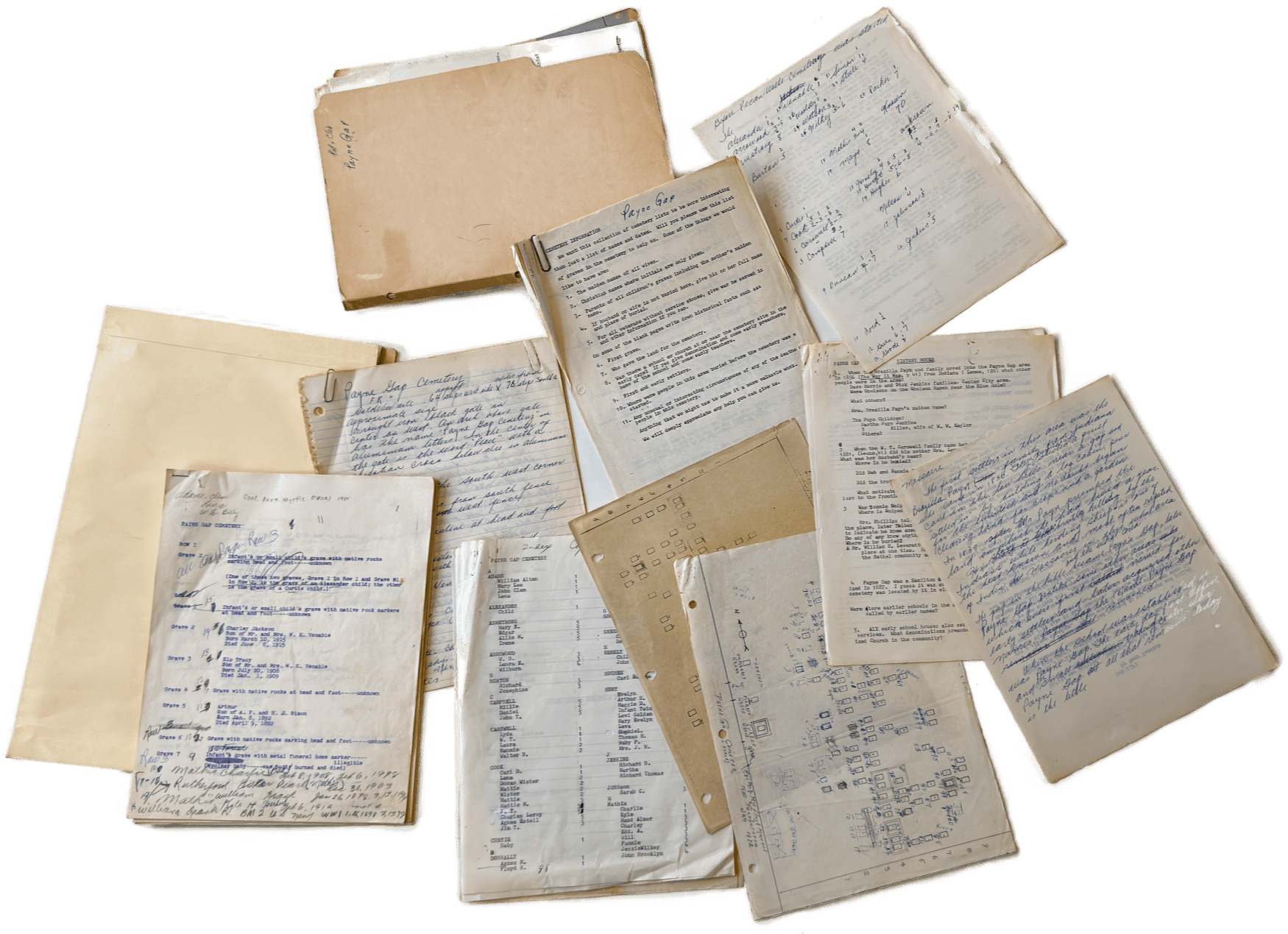
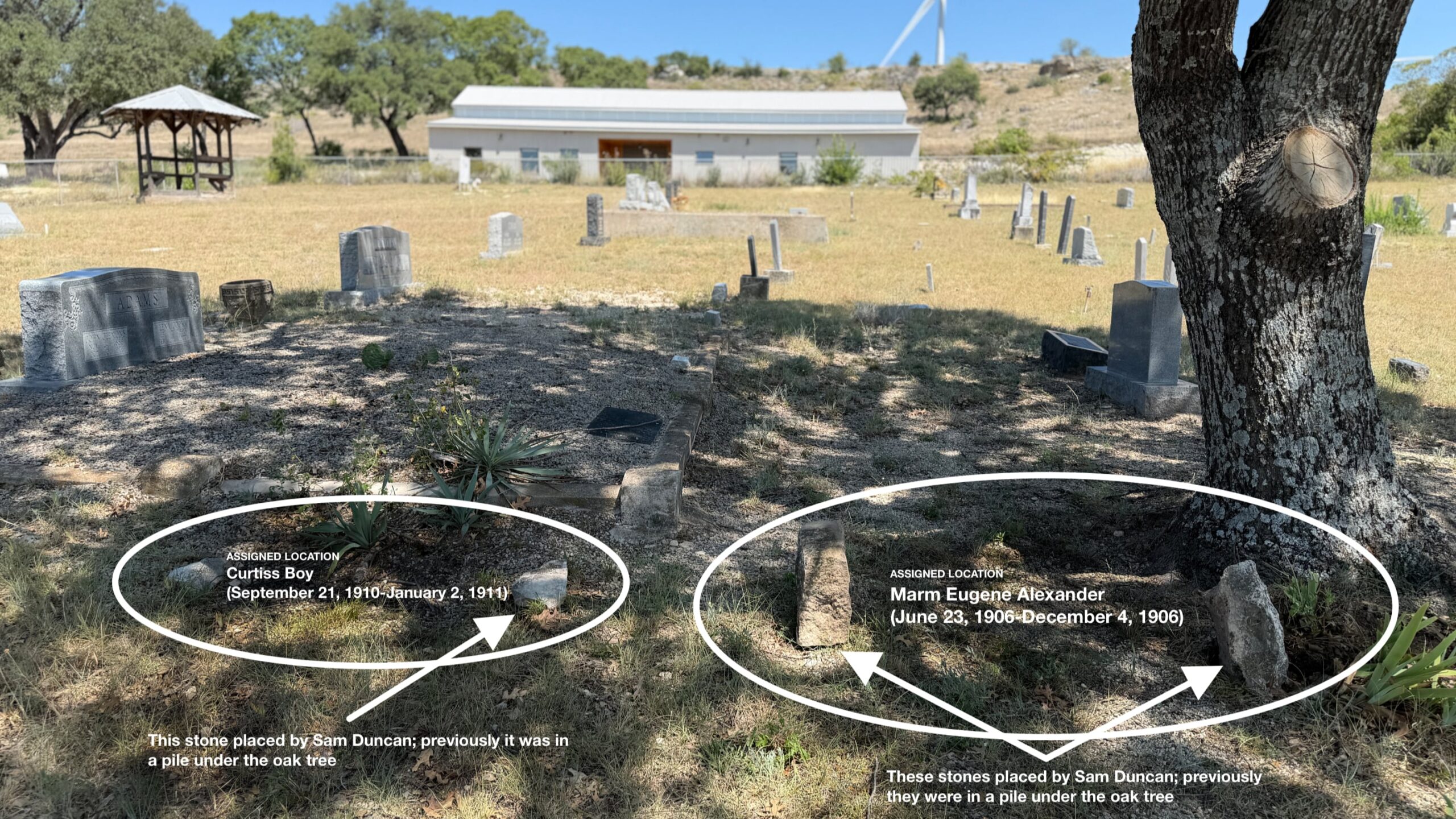
We now understand that the infants had a kindred relationship and that Kate and her brother shared the tragedy of loosing an infant. A deep dive into Ancestry.com turned up a likely candidate for the Alexander grave. J.S. and his wife, Mary, had a child named Marm, who was born on June 23, 1906, and died about five months later on December 4, 1906. Find a Grave, as of this writing, has no record for the child. The couple appear to have been living near Long Cove, north of Lometa, when the child was born. Before this mystery was unraveled, the only thing marking the Curtiss grave was a small rock headstone, easily mistaken as randomly placed. At some point, his footstone got put at the base of the nearby oak tree. Marm’s rock headstone and footstone were also found at the base of the same tree. As it stands, we still don’t know for certain which grave belongs to whom. Yet It makes sense that the first to be buried, Marm, would have been lined up with an existing grave (probably Elo Venable), with baby Curtis starting a new row next door to Marm to the west. Their new locations have been assigned using that logic.
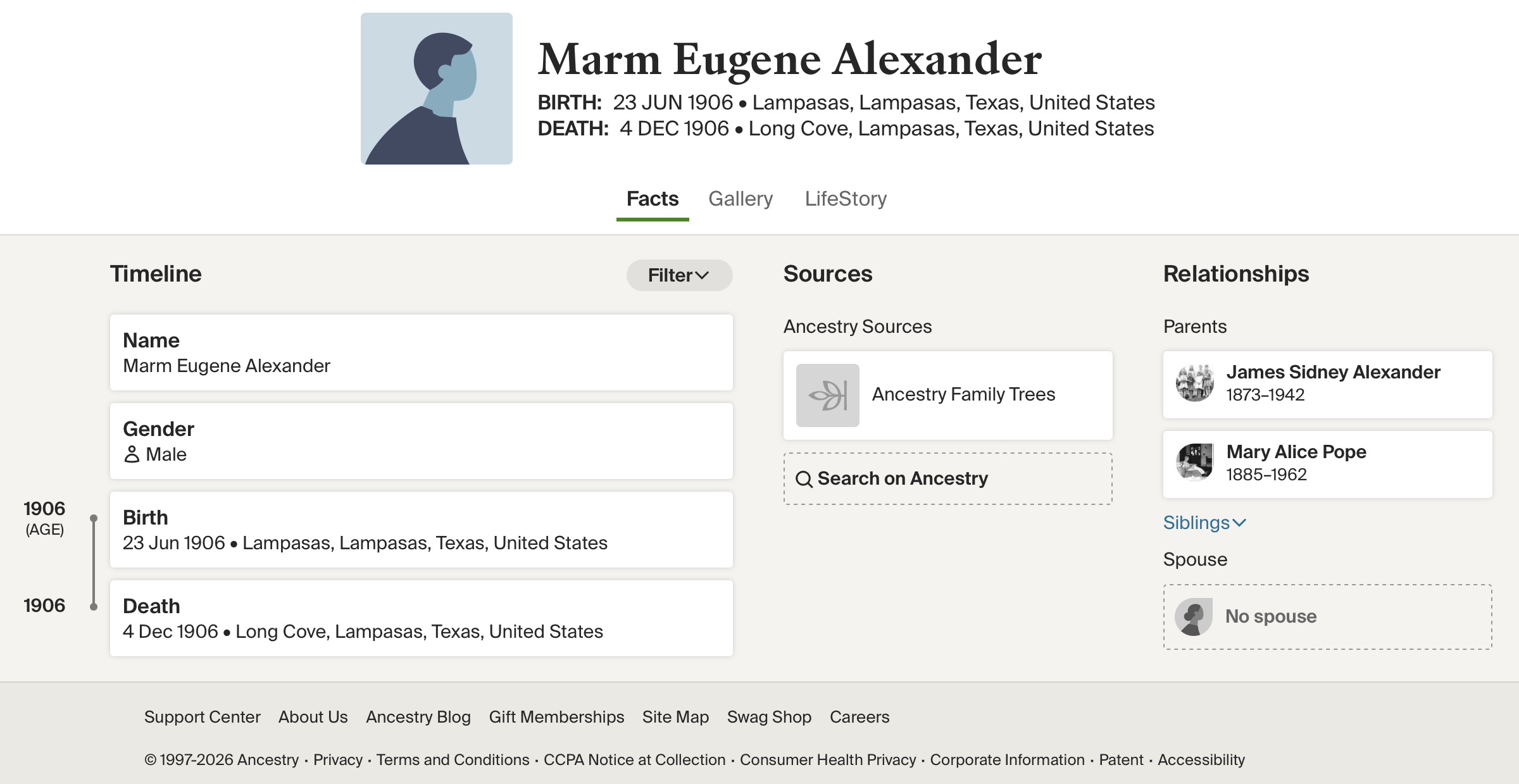
Time relentlessly marches on and gradually erases the memories of deceased loved ones. Our cemeteries perpetuate their memories, yet without care, even these physical reminders can easily be lost, and, as we see here, recovering them can be quite challenging. Many names found in the bulleted listing represent newly-identified people that surfaced in the Mills County Historical Commission cemetery file. Many of those are children that were buried at an early time when proper headstones were not easily procured. And a good many are graves that have been completely erased from neglect.
The lesson to learn is not to delay applying grave preservation measures—especially ones that help us record names associated with graves—because identification gets harder as time passes. Cemetery managers should be aware of the resources available from the Texas Historical Commission’s Cemetery Preservation program, which also administers the Historic Texas Cemetery Designation, the first step toward recognizing and preserving Texas cemeteries that are at least fifty years old.
Cemetery Updates
- Marm Eugene Alexander – newly identified and directory entry added
- Bob Altenloh – new, monument installed and directory entry added
- William Thomas “W.T. or Uncle Billy” Carswell (1846-1912) – transcribed epitaph
- Curtiss Infant (Boy) – grave location assigned (location previously unknown)
- Glenn Dale Duncan – monument installed and photographed
- Henry Tharp Duncan – new photo of headstone
- Shirley Ann [Hamilton] Duncan – monument installed and photographed
- Franklin Child – newly identified
- Green Child – new
- Hensley Child – newly identified
- Matilda Jane “Mattie” [Duncan] Hunt – added photo portrait
- Hunt – new
- Hunt Child – new
- Otis Mathis – newly identified
- Opal [Taylor] Prachyl – new photographs of headstone and footstone
- Eslar Pearl [Mathis] Rutherford – added newspaper article covering her as victim of bilking
- Unidentified Grave – new information
- Unidentified Grave – new
- Unidentified Grave – new information
- Unidentified Grave – new
- Unknown Child – new information
- Unknown Child – new information
- Unknown Child – new information
- Unknown Child – new
- Mrs. Warren Grave – new
- Warren Child – new
- Wilkey Female Infant – new
- Woolsey Infant – new
- 1A full accounting of Dr. Biggs’ life is told in The Brush of Angels’ Wings: the Story of the Country Doctor by Roland Windell, Dr. Biggs’ son-in-law (San Antonio, The Naylor Company, 1952) ↩︎
